
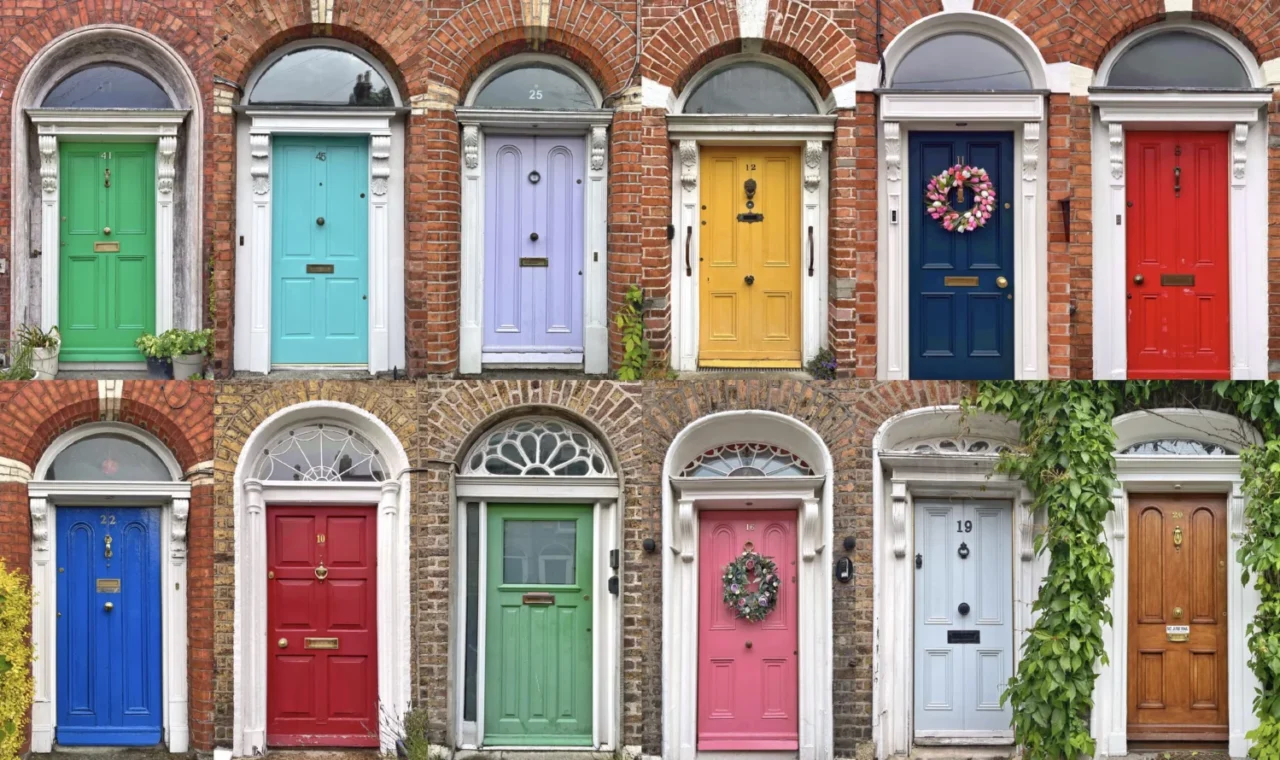
Dublin’s colourful doors are undoubtedly one of the city’s most distinguishing feature, but have you ever wondered why they’re painted that way? As a resident in the fascinating city of Dublin, I’ve spent a lot of time hunting down these beautiful doors, but the more I looked into their history, the more intrigued I got. In this article, I’ll walk you through their origins, a few stories and legends, and the best spots to find Dublin’s colourful doors yourself.

Table of Contents
The Origins of Dublin’s Colourful Doors
There are many stories surrounding the origin of Dublin’s colourful doors, but the most likely explanation is that they originally started as a simple way for residents to tell their homes apart. During the Georgian period (early 1700s to mid-1800s), a large part of Dublin was built in a very orderly style. Strict regulations led to a lot of houses looking almost identical, which made it more difficult for people to recognise one home from another.
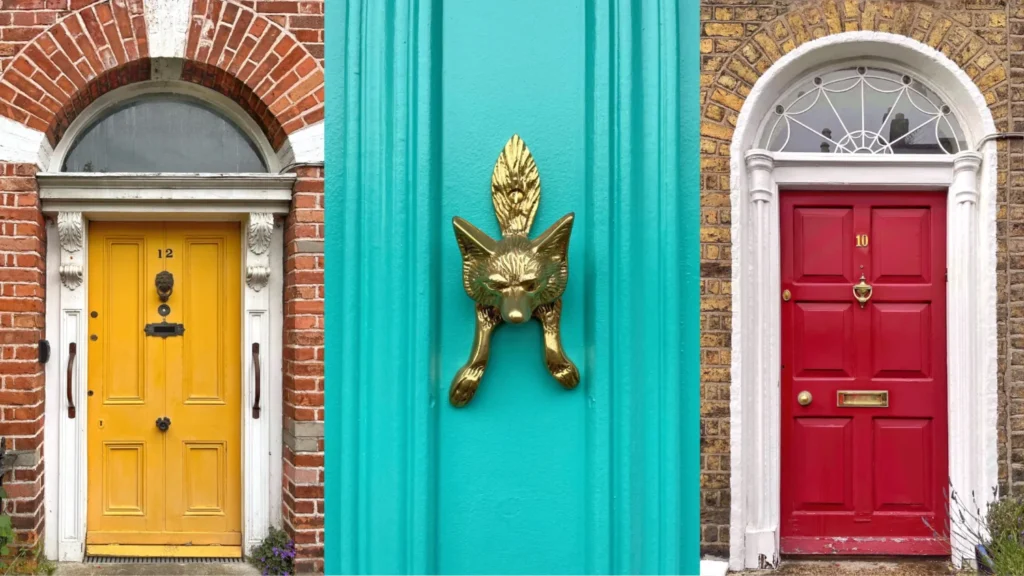
To solve this problem, locals started painting their front doors in bright colours. However, what began as a way to avoid confusion quickly turned into a form of expression. These painted doors added a touch of colour and personality to the otherwise plain streets. Over time, they became a symbol of individuality, a way for the Irish residents to rebel against uniformity. Today, the colourful doors of Dublin, as well as being part of the city’s heritage and identity, show the strong and proud spirit of the Irish.
Legends Surrounding Dublin Doors
The Black Door
The most famous story behind Dublin’s doors says that after Queen Victoria died in 1901, Britain asked people across the empire to paint their front doors black in mourning. In Dublin, some residents refused to oblige and instead painted their doors in bright colours as an act of defiance (another testimony to the strong will of the Irish).
The Drunken Husbands
According to another legend (my favourite!), some wives painted their doors bright colours to help their husbands find their way home after a night out drinking. This simple solution not only made it easier for the men to find their houses but also added a touch of colour to the neighbourhood.
Where to Look for Dublin Doors
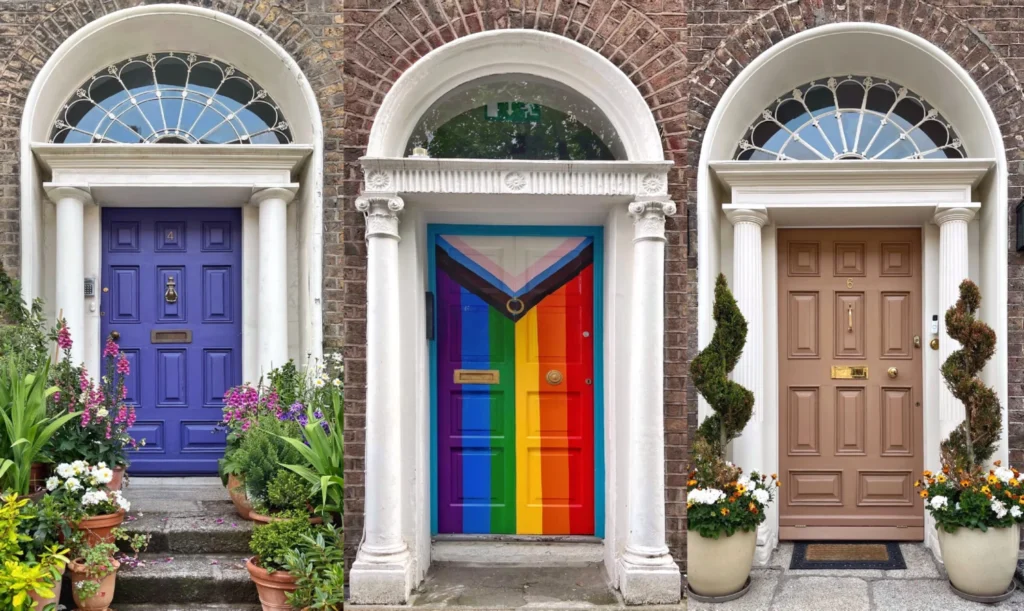
Dublin’s colourful doors can be spotted throughout the city, but some areas have a greater concentration than others. My favourite spots are:
- Mountjoy Square Park and surroundings (Dublin North)
This area is packed with those colourful doors. My favourite street here is North Great George’s Street, it’s quiet and some buildings are covered in greenery, which makes it look really lovely.
- Fitzwilliam Square and surroundings (Dublin South)
Another good spot to go door-hunting is the Fitzwilliam Square area, especially Fitzwilliam Street. I particularly love how some embassy doors match the colours of their national flags.
Ready to go door-hunting in Dublin? Once you start, you’ll notice that there’s more to them than just the colours: from fancy knockers to intricate fanlights, each door is unique in its own way. It’s a fun and relaxing way of exploring the city, plus you’ll get to create your own unique montage of Dublin’s colourful doors!



Leave a Comment