
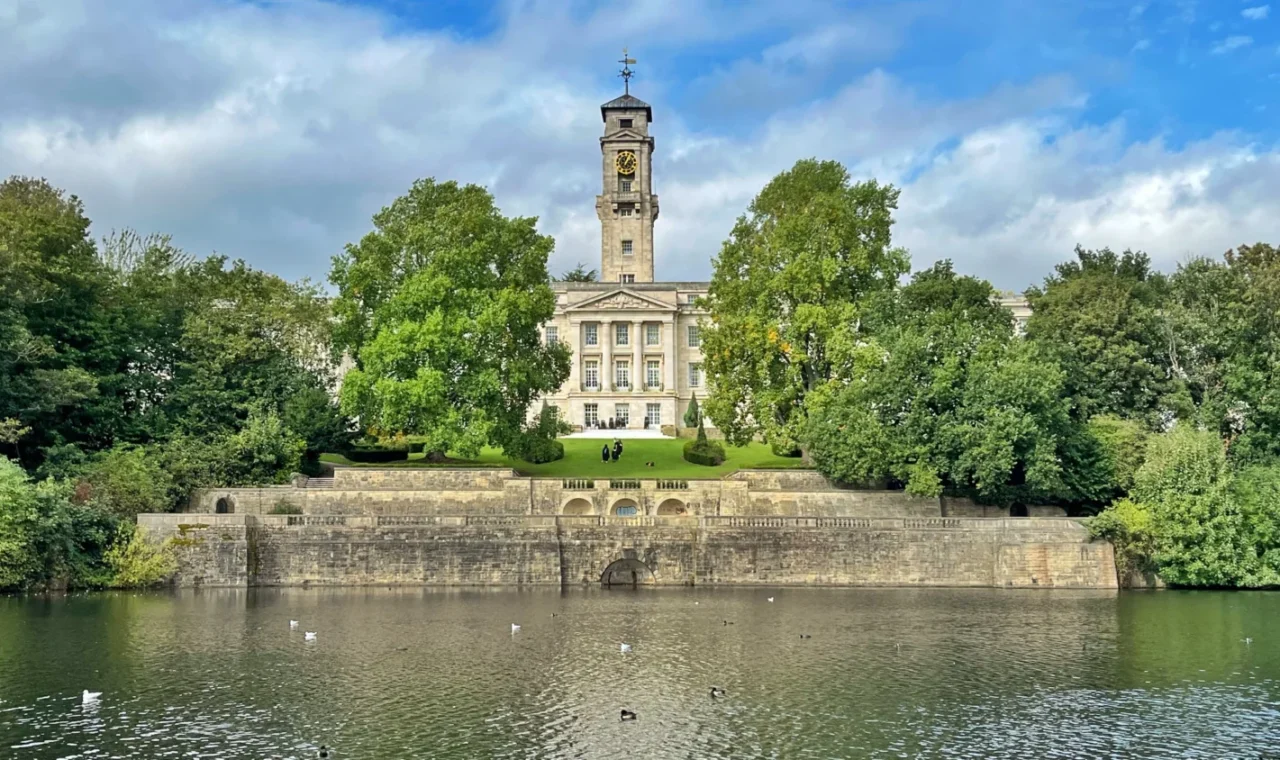
I went to Nottingham for one weekend and ended up walking half the city. Twice, in some spots. Between Robin Hood detours, an accidental hour spent underground, and one very long stare at a herd of deer, I came away with five walks worth doing on repeat — even though the weekend threw a dozen more options at me. These are the ones that made the cut.
Here’s my full guide to the best walks in Nottingham, from castle grounds to wetland trails.

Table of Contents

Before You Go
A few practical notes before you lace up:
Footwear
Comfortable shoes are all you need. Some city streets are cobbled, and the canal paths and Attenborough can get muddy after rain.
Weather
Nottingham is easy to explore year-round, but layers are a good idea. The weather can change quickly, especially in spring and autumn.
On paid attractions
Most of these walks are free, but a few stops charge admission. Nottingham Castle, the City of Caves, the National Justice Museum and Wollaton Hall all require tickets if you want to go inside. The walks themselves can still be enjoyed without paying, but it’s worth checking the latest prices and booking ahead where needed, especially for the City of Caves.
Best Walks in Nottingham
Robin Hood’s Footsteps
Distance: ~2 miles / 3 km
Time: 1–1.5 hours
Best for: History, legends and city views
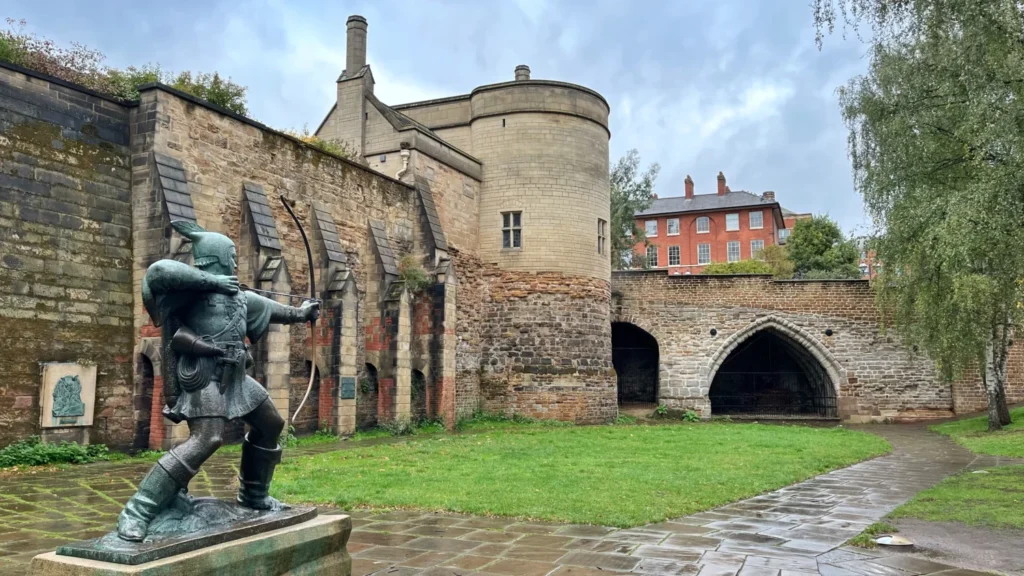
If you only have time for one walk, make it this one. Out of everything I did that weekend, this route wins on views alone.
Start at the Robin Hood Statue, bow drawn, tucked against the castle walls — there’s always someone lining up the exact same photo. From here the path climbs, and the city starts to fall away behind you.
Nottingham Castle sits at the top of that climb, and the ticket — £18, valid for a full year — buys you more than a look inside. It buys you the walk up to it, rooftops spreading out below in a sightline you’d normally pay a rooftop bar for.
The view alone made the ticket worthwhile.
Coming back down, the route doesn’t retrace itself — it drops you into some of the oldest streets in the city. Ye Olde Trip to Jerusalem is carved into the rock beneath the castle and has been pouring pints since the 1100s, or so the story goes. I ducked in for exactly one pint, because you have to.
From there it’s a short stretch to Brewhouse, all exposed brick and easy energy, before the walk opens out properly into The Exchange — a covered arcade so grand it’s worth slowing down for even if you’re not spending a penny.
Old Market Square is right next door, and it’s where the walk finally exhales. Sit for twenty minutes and just watch the city move. From the square, it’s a flat, easy walk back through the historic centre to where you started, castle walls rising into view again like the whole loop was leading you home.
See the full route on Google Maps
Nothing is worse than landing somewhere new and searching for WiFi before you can even find your way. I recommend an eSIM so you can use maps and travel apps the moment you arrive.
Here is the eSIM I use →Beneath Nottingham’s Streets
Distance: ~1 mile / 1.6 km (including City of Caves)
Time: 2–3 hours (including City of Caves)
Best for: Underground history and the Lace Market
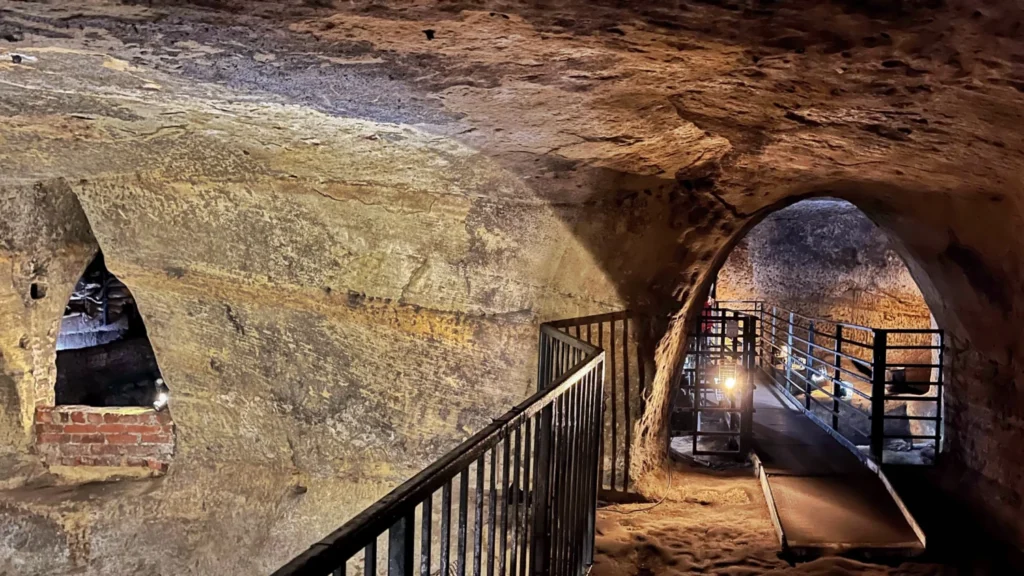
This one starts underground, which is a strange way to begin a walk.
The City of Caves pulls you down into sandstone tunnels that have been an air raid shelter, a medieval tannery, storage, shelter, hiding place — centuries of Nottingham stacked on top of each other. I went in expecting a quick detour. I came out having lost track of time. Twice.
Climb back into daylight and the shift is immediate — from tunnels to Nottingham Contemporary, all glass and lace-pattern concrete, one of the sharpest pieces of modern architecture in the city. From there the streets narrow and cobble underfoot as you reach Weekday Cross, the kind of junction that feels like it’s been quietly there for eight hundred years, because it has.
St Mary’s Church rises above the rooftops before you actually reach it — its spire tracks you through most of the Lace Market’s side streets. Stepping inside after the caves and the cobbles is its own kind of atmosphere shift: quiet, cool, church-still.
The last stretch brings you to the National Justice Museum, five minutes on foot, courtroom drama and reenactments layered onto the same underground-history feeling the caves started with. From here it’s a short loop back to where you began, the Lace Market’s converted warehouses and hidden coffee stops trailing you the whole way.
See the full route on Google Maps
Among Deer, Lakes and Historic Estates
Distance: ~4 miles / 6.3 km
Time: 2–3 hours
Best for: Deer, lakes and peaceful green spaces
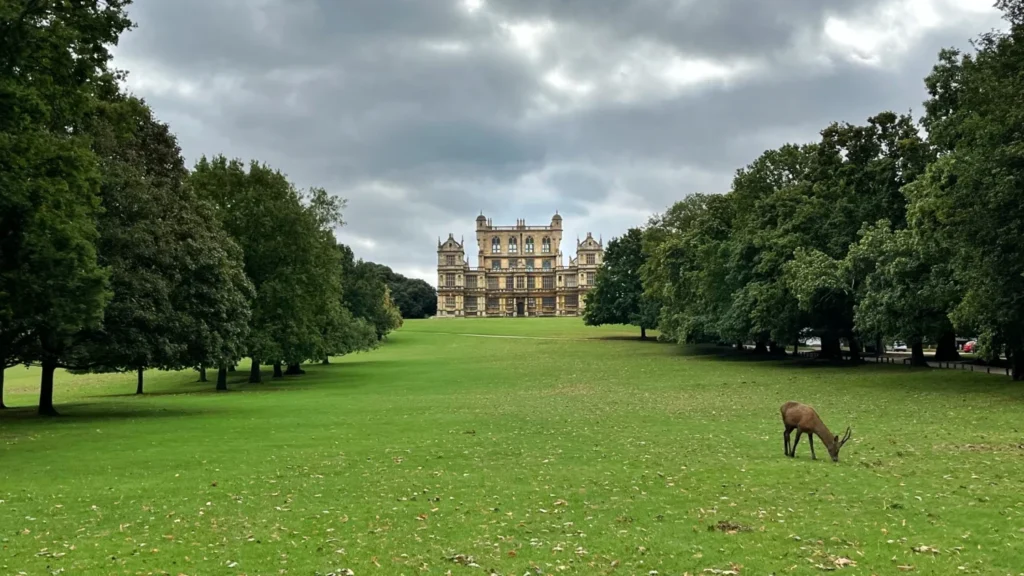
After two days of pavement and pub crowds, this was the exhale I didn’t know I needed!
This is the walk where the city properly lets go of you. It starts at Wollaton Hall, an Elizabethan estate that’s also, famously, played Wayne Manor on screen — impressive, but really just the warm-up!
The real walk is the loop around Wollaton Park that follows. Deer wander close enough that you’ll stop mid-sentence to watch them, and Wollaton Park Lake curls around the back of the estate calm enough that you’d forget you’re still inside a city at all.
From the park, the route doesn’t turn back — it keeps going, through the University of Nottingham grounds. This is where the atmosphere changes again: manicured, academic, quieter than the deer park but with its own kind of green.
That quiet keeps building until you reach Highfields Park, greener and softer than anything you passed earlier. Highfields Lake is the finish line — joggers, ducks, the occasional paddleboarder depending on the season. By the time you get there, the pavement and pub crowds of the city feel a long way behind you.
This is a one-way walk, so plan a taxi, bus, or a return trip along the same path back to Wollaton.
See the full route on Google Maps
Along Nottingham’s Waterways
Distance: ~4 miles / 6.1 km
Time: 2–3 hours
Best for: A relaxed riverside escape
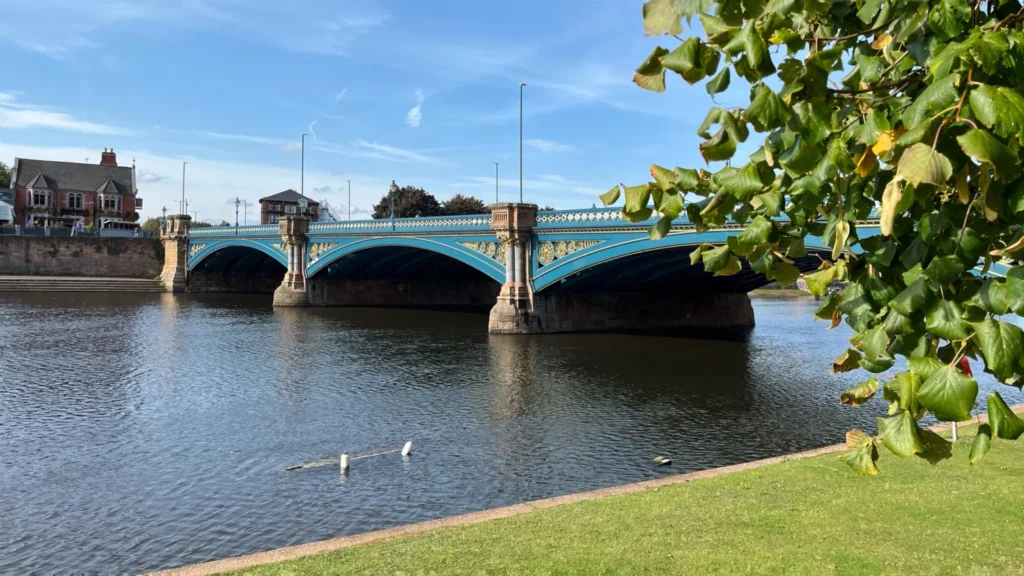
Nottingham’s canal side doesn’t get talked up the way the castle or the caves do, and that’s exactly why it’s worth an afternoon.
Start at Castle Wharf, where converted warehouses now do time as bars and restaurants — The Canalhouse has tables right on the water if the weather’s playing along. From here the Nottingham Canal sets the pace: narrow, still, low-key.
Follow it east and the canal doesn’t just widen — it hands you off completely. At Trent Bridge, the water changes character entirely. Cross it, and the River Trent takes over: wider, faster, a different mood altogether from the tucked-away canal you just left.
From the far bank, the Wilford Suspension Bridge is next, swaying slightly underfoot in a way that makes you notice the river properly for the first time. On the other side, the Nottingham War Memorial Gardens slow everything down again — a pocket of stillness before the walk opens out through The Meadows, green and unhurried.
The Victoria Embankment picks up from there, flat and easy, river views the whole way — this stretch is about pace, not landmarks. The Wilford Footbridge carries you back across the water one last time, and from there the route turns inland, tracing its way back toward the city centre as the river gives way to streets again.
Save this one for a morning when you want Nottingham to slow all the way down.
See the full route on Google Maps
Attenborough’s Wild Wetlands
Distance: ~4 miles / 6 km
Time: 2–3 hours
Best for: Wildlife and a quiet nature walk
A little further out than the other four.
Worth the extra effort if you’ve got wildlife on your list!
This one starts at Attenborough Nature Centre, and it’s the walk where I’d actually encourage you to lose the plan. The main route heads out toward Clifton Ponds, a viewpoint that’s worth pausing at longer than you mean to — reed beds, open water, birdlife you wouldn’t expect this close to a city.
From there the path picks up the River Trent, following it until a small weir bridge crosses you over to the other side. Turn left here and the reserve opens up properly — trails braiding through wetland, the noise of the city gone completely.
Another bridge crossing loops you back in the direction you came from, past bird hides worth ducking into even if you’re not the binoculars-and-checklist type. A few quiet minutes watching the water usually does the trick.
From here, you’ve got options. Push on through Attenborough Cricket Club for a slightly different finish, or simply retrace your steps back to the Nature Centre — either way works. That’s the whole point of this one: it rewards wandering more than it rewards following directions.
If Robin Hood’s Footsteps is the walk for a city view, this is the one for a break from the city entirely.
See the full route on Google Maps
Loved discovering Nottingham on foot? See how to turn your visit into a full weekend filled with history, legends and hidden gems.
Read my guide to a weekend in NottinghamNottingham Walks at a Glance
| Walk | Distance | Time |
|---|---|---|
| Walk in Robin Hood’s Footsteps | ~2 miles / 3 km | 1–1.5 hours |
| Beneath Nottingham’s Streets | ~1 mile / 1.6 km (including City of Caves) | 2–3 hours (including City of Caves) |
| Among Deer, Lakes and Historic Estates | ~4 miles / 6.3 km | 2–3 hours |
| Along Nottingham’s Waterways | ~4 miles / 6.1 km | 2–3 hours |
| Attenborough’s Wild Wetlands | ~4 miles / 6 km | 2–3 hours |
Frequently Asked Questions
Ask Ever!
Which of these five would you tackle first? Let me know in the comments below!



Leave a Comment