
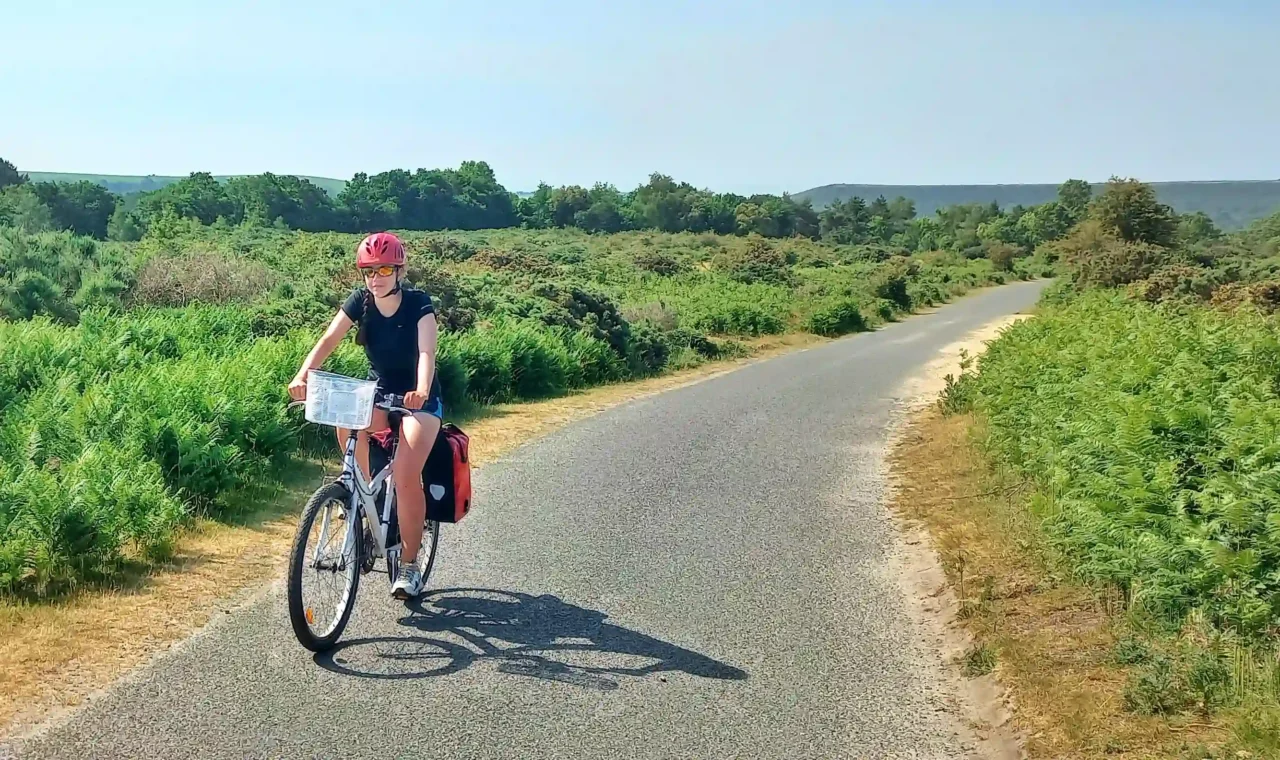
In June 2023, I set off on a cycling trip across England with my dad. We rode from Dover to Land’s End, a 400-mile journey through hills, coastlines and countryside. As a cycling enthusiast with a deep love for Britain, the opportunity to cross the country on two wheels was something I couldn’t pass up. This trip turned out to be the adventure of a lifetime: beautiful, challenging, and full of unforgettable moments. In this post, I will share how we did it: the route we followed, what we packed, where we stayed, and all the tips we picked up along the way. If you’re thinking about doing a cycling trip like this, or simply looking for inspiration, this guide will help you get started.

Table of Contents
Route Overview
My dad and I set off in early June 2023 and spent 15 days cycling across the southern coast of England. We covered about 425 miles (685 km), following National Cycle Route 2 for most of the way before joining National Cycle Route 3 in the southwest. Although we were blessed with splendid weather and breathtaking views, the not-so-flat nature of the terrain made the trip quite challenging. Devon and Cornwall were especially tough to cycle through, as each day brought countless new hills that slowed us down considerably.
Trip Breakdown
Day 1–3: Dover to Brighton
A Gentle Start with Seaside Views
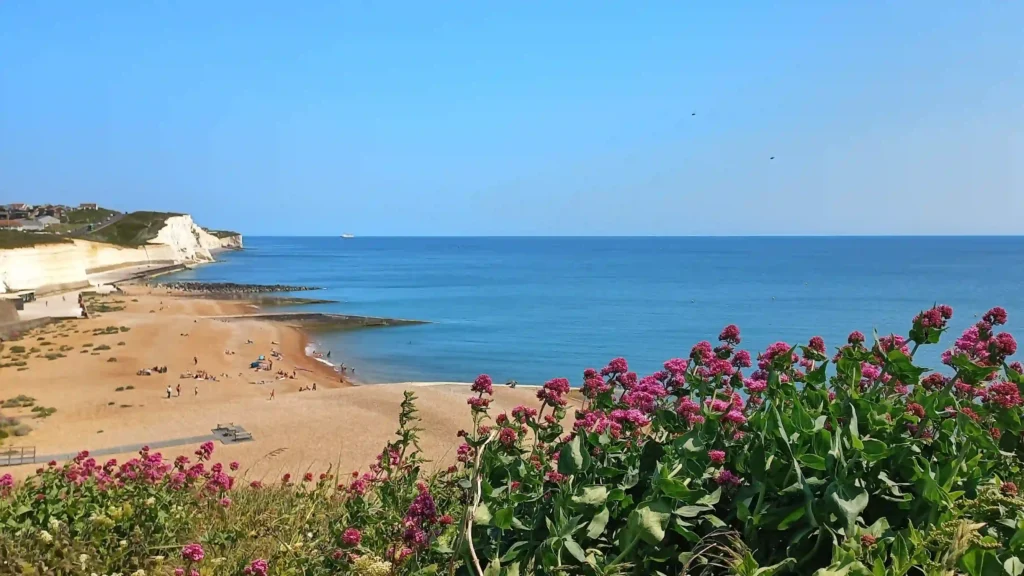
We reached Dover by ferry in the morning under a bright, clear sky. I didn’t expect England to welcome us with such pleasant weather, and certainly not for it to stay with us for most of the journey. We spent a bit of time exploring the town and walking along the White Cliffs of Dover before setting off along the Kent coast on National Cycle Route 2 (NCR 2) towards Hastings and Brighton. This first stretch was very scenic and easy to cycle, with calm roads and breathtaking coastal views.
- Highlights: White Cliffs of Dover, Dover Castle, Folkestone, Hastings Old Town, Brighton Pier and seafront.
Day 3–5: Brighton to Southampton
Rolling Hills and Peaceful Countryside
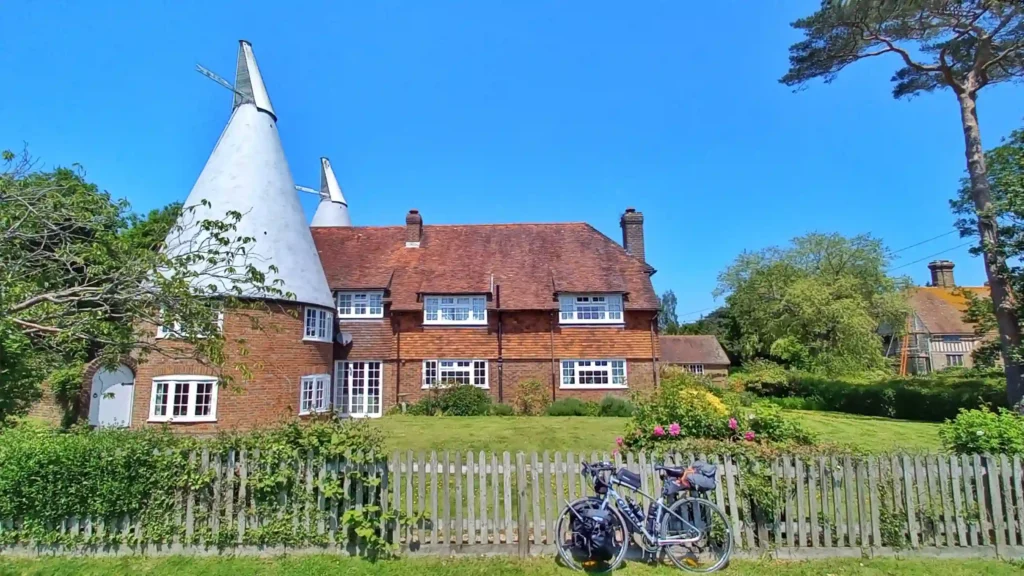
It is only after passing Brighton that we really found our rhythm. This stretch of NCN 2 takes you through East Sussex and into Hampshire, with the South Downs National Park, an Area of Outstanding Natural Beauty (AONB) and one of the most famous landmarks in England. Here, you will find countless seaside villages, thatched roofs and gentle rolling hills. The locals we met along the way were friendly and welcoming, and we often stopped for a cup of tea and a chat. By the time we reached Southampton, I had completely fallen in love with England.
- Highlights: South Downs National Park, thatched-roof villages, Portsmouth and Southampton.
Day 5–10: Southampton to Exeter
Steep Hills and Rural Devon
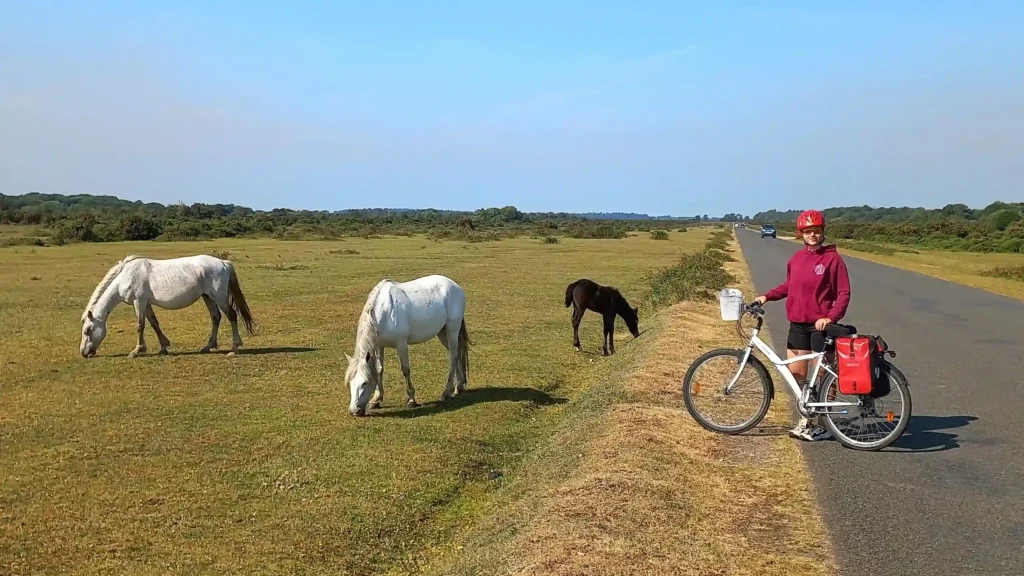
As you head towards Exeter, the landscape becomes more hilly and challenging, especially once you pass into Dorset and then Devon. This slowed us down a lot, and we often had to get off the bikes and walk when the slopes were too steep. We even used our brakes so much that they stopped working properly, so we ended up walking downhill as well as up! Campgrounds also became harder to find in this region, as many were not yet open for the season in early June, so we had to wild camp for a few nights.
- Highlights: Jurassic Coast and Exeter Cathedral.
Day 10–12: Exeter to Plymouth
Tough Climbing and the Ferry Crossings
After leaving Exeter, everything felt more remote. The hills were steeper, the roads windier and narrower (and therefore less safe, especially since cycling lanes became rare), and there were long stretches where we didn’t see many people at all. We often had to rely on the kindness of strangers who let us camp in their backyards as campgrounds were scarce and rarely open. Although this part of the trip was tougher than the early days, this is where I made some of my favourite memories. The people we met were so welcoming that I still think about them every now and then, even years after completing this trip!
- Highlights: Agatha Christie’s Greenway, Plymouth, and the ferry crossings of the River Dart and Tamar.
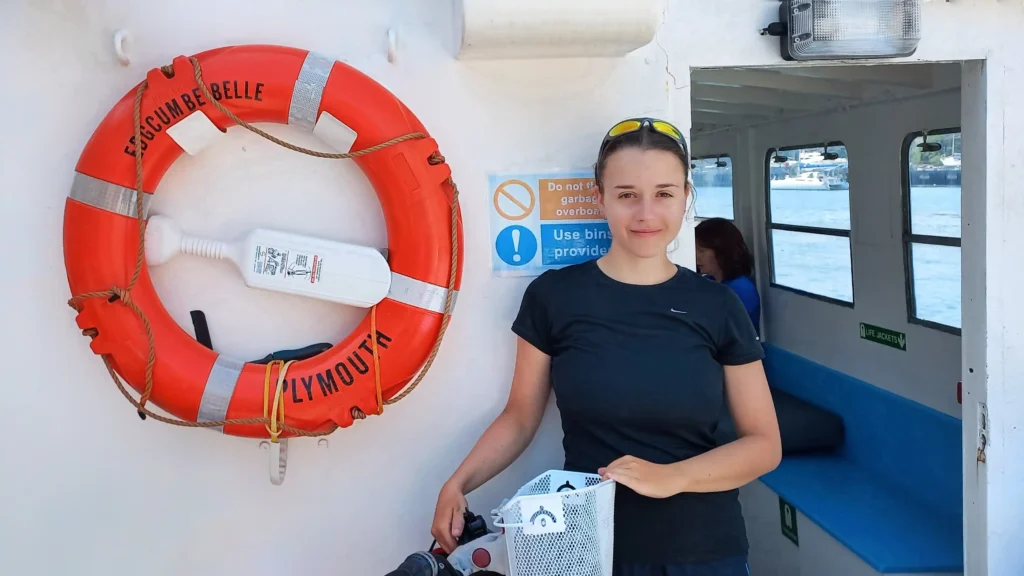
Day 12–15: Plymouth to Penzance
Cornwall’s Steep Hills and Coastal Beauty
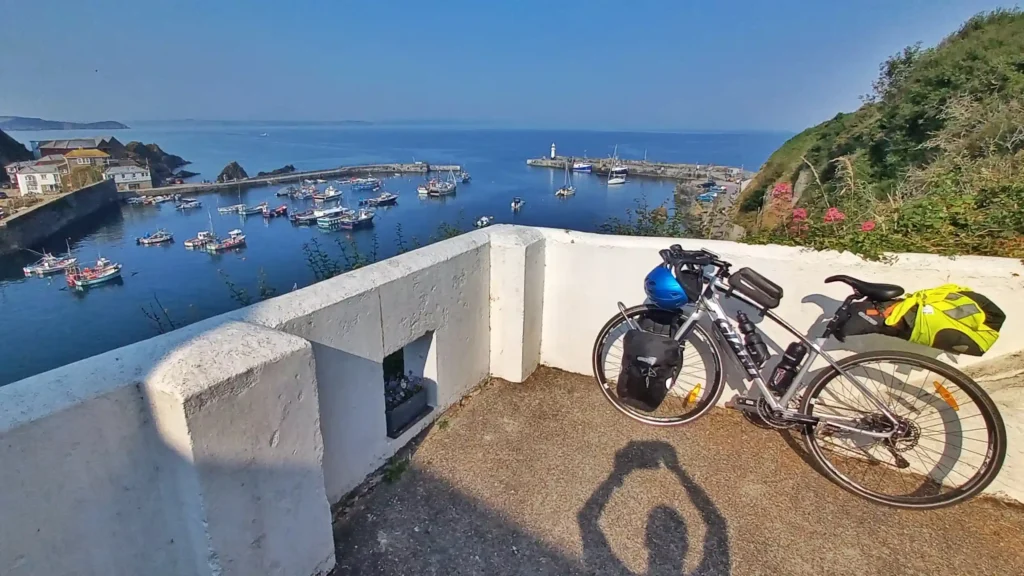
After leaving Plymouth, the National Cycle Route 2 merged into the National Cycle route 3, though the terrain remained just as rugged as before. Cornwall did not disappoint. Cycling along the coast, we were able to fully take in the bright blue water, small coastal villages and wide open sea views. The hills were still steep, but the quiet roads and breathtaking scenery made the climb feel worth it. By then our legs were stronger, so the climbs felt a little easier than at the beginning. Reaching Penzance felt like the beginning of the end.
- Highlights: Coastal roads, seaside views and Penzance.
Day 15: Penzance to Land’s End
Arrival in the Promised Land
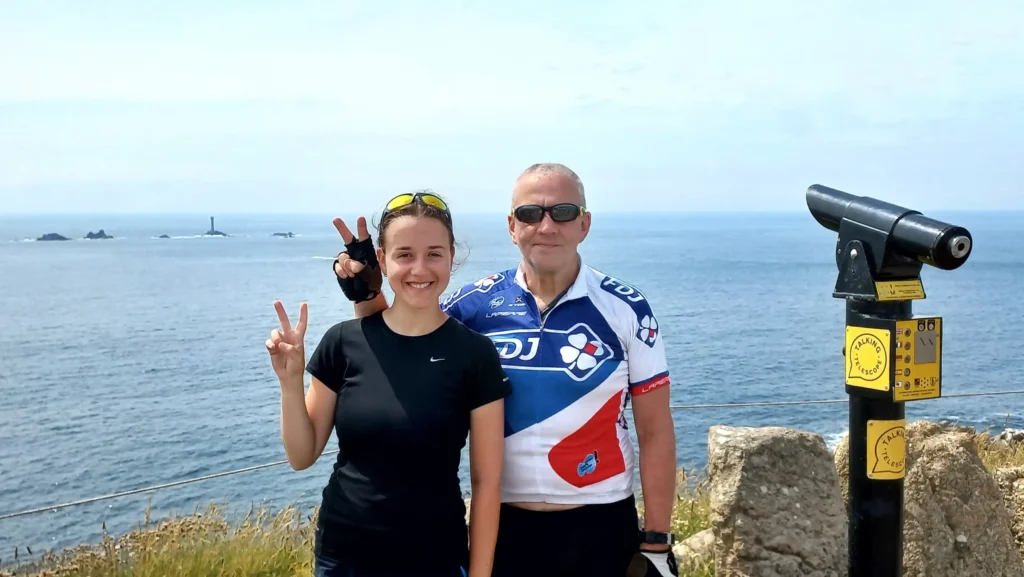
This final stretch from Penzance to Land’s End is short (10 miles) and takes less than one or two hours to cycle. The road follows the coast almost the entire way. It felt a bit like the last sprint in Pékin Express (my favourite French TV series!), when the teams race towards the final flag. After weeks of cycling and camping our bodies were tired and in need of a break, but the excitement of knowing the end was so close gave us a new burst of energy that carried us right to the finish. Reaching Land’s End felt like arriving at the edge of the world.
- Highlights: Land’s End, Longships Lighthouse, coastal views and St Ives (small town worth a detour after reaching Land’s End).
Accommodation
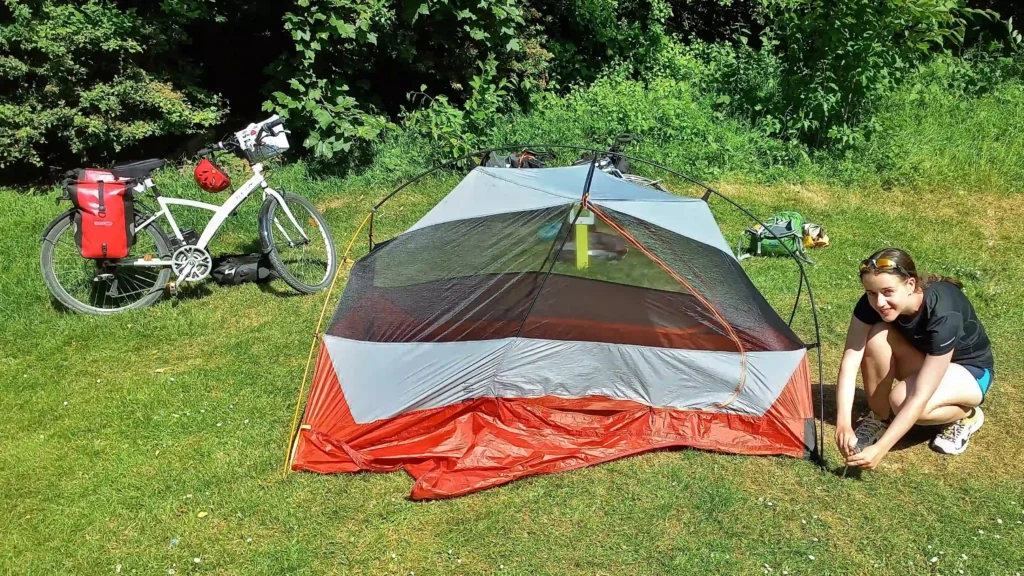
When it comes to accommodation, it’s important to note that wild camping is not permitted in most parts of England. As a result, we primarily stayed in campsites, pitching our tent in established camping grounds along the route. However, our trip wasn’t without its challenges. Since we cycled in June, many campsites, particularly in county Devon, hadn’t yet opened for the season. This made it harder to find places to stay, especially in more rural areas.
We didn’t book accommodation in advance, as it’s difficult to predict how fast you’ll reach each destination when cycling long distances. This flexibility allowed us to go with the flow, but it also meant we had to get creative on occasion. On the nights when we couldn’t find open campsites, we ended wild camping out of necessity. A couple of times, we were able to pitch our tent in a farmer’s field and even a kind couple’s backyard, experiences that no doubt made the trip even more memorable!
For those who prefer not to camp, England does offer plenty of hotels, inns, and guesthouses along the way. However, these can be more difficult to find in the countryside, and many might already be full. It’s a good idea to book a day or two ahead, especially in smaller towns or more remote areas, to ensure you have a place to stay. The rural nature of the journey often makes finding accommodations a bit trickier.
If you’re planning a similar cycling trip, the key is to find a balance between planning and flexibility. It’s impossible to predict every twist and turn along the way, so being able to adapt to the unexpected will make your journey smoother and more enjoyable. Having a backup plan is essential, but don’t forget to embrace the adventure and go with the flow! That’s what truly makes the trip memorable.
Food & Refuelling
Staying fed and hydrated was one of our main concerns during this trip. Fish and chips quickly became a ritual for us. Whenever we reached a town around lunchtime, we looked for the nearest chippy. However, this English delicacy, comforting as it was, could not have sustained us on its own, so we relied heavily on supermarkets for the rest.
Nominated Supreme Head of Provisions and Meal Operations (or HPMO for short) by my dad, I made sure we regularly stocked up on food that travelled well: tins of pasta, instant mash, bread, and a generous supply of snacks (Mr Kipling quickly became our favourite sweet treat!)
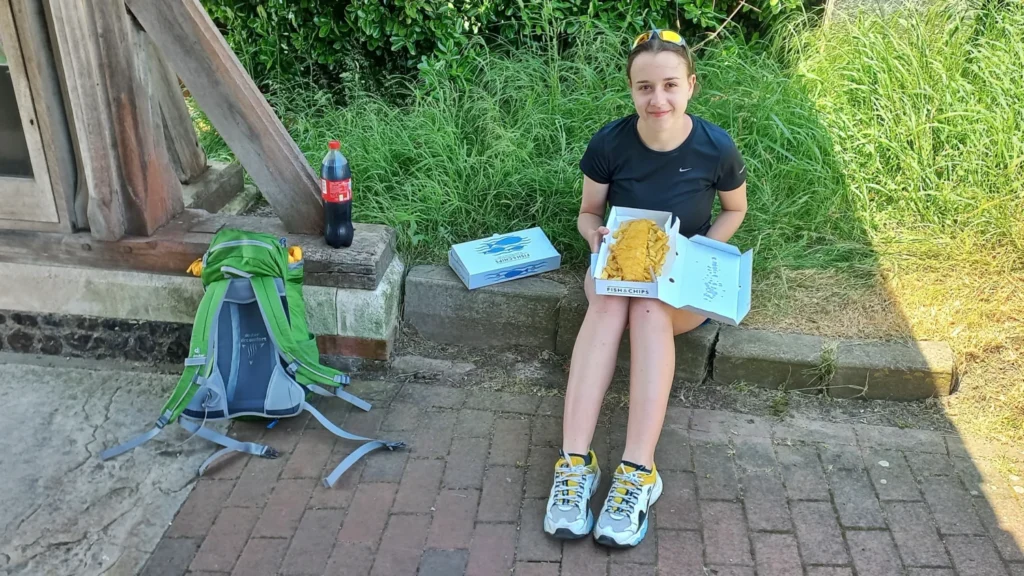
As Head of All Things Edible, I made sure the morale of my troops stayed high by preparing whatever simple meals I could at the end of each day (I’m a terrible cook, but thankfully my dad isn’t picky and will happily eat anything as long as there’s calories in it!)
Water was just as important. We always kept several bottles with us, especially since wild camping sometimes meant going a couple of days without access to a tap. Whenever we ran low on water, we would look pubs or cafés and asked for refills. During cycling trips, staying hydrated makes a huge difference, especially on warm and sunny days.
Gear, Bike Setup & What to Pack
Having the right bike setup made the whole trip easier. Before leaving, we made sure to bring only the essentials: tent, sleeping bags, basic tools and a few spare parts for the bikes. The National Cycle Route 2 and 3 is far from flat, so every extra weight will make a difference (trust me). I would recommend bringing spare brake pads, as we wore through ours faster than expected. A good set of lights, a small yet reliable lock and a power bank were also important (keep in mind that not all campgrounds offer electricity for campers).
Clothing wise, I would recommend keeping it simple while also being wary that the English weather is very unpredictable. I made sure everything I packed was easy to wash and quick to dry (polyester works best), which allowed me to bring only a couple of outfits: a warm one for chilly mornings and a lighter one for sunny days. A waterproof jacket and trousers are a must in England, and they also come in handy in windy weather. Packing light while still being prepared for the unpredictable is absolutely essential when planning any long distance cycling trips.
Challenges & Recommendations
This being my first long-distance cycling trip, I learnt a lot along the way. If you plan on doing a similar trip, whether it’s in England or elsewhere, be mindful of the following:
- Pack light, but take everything you need.
- Check elevation maps online before choosing your itinerary.
- Follow road signs for cycling lanes (GPS trackers often suggest shorter routes that may be less safe for cyclists.)
- Bring plenty of sunscreen no matter where you plan on going (yes, even if it’s England).
- Be prepared for rain at any time.
- Watch your water supply and do not assume you will reach a campground or hotel before nightfall.
- Wear a high-visibility jacket in low-light conditions.
- Avoid busy roads and don’t hesitate to walk on the side when it is unsafe to ride.
What I’ll Remember
What stood out most during the trip wasn’t just the breathtaking landscapes or the challenge of the ride: it was the people. Every day, without fail, someone offered us a cuppa, whether it was a friendly shopkeeper, a fellow cyclist, or a stranger we met in a campground. On several occasions, we were even invited into people’s homes to share a meal. The kindness of the English left a lasting impression, and I’m truly grateful for every encounter we had. These magical moments of connection are precisely what fuels my love for the British Isles.
But what made the journey truly unforgettable was sharing it all with my dad. Through both the good and the bad, we were always there for each other. I’ll always remember falling asleep in a farmer’s field, the ground so uneven we had to hold tight to the mattress to keep from sliding to the end of the tent. I’ll always remember watching the sunset from the beach by the River Tamar after a long day’s ride, when we hadn’t been able to find a single open campsite. And I’ll always remember the fits of laughter my dad and I had one day when, as we were sharing fish and chips, a seagull swooped in and stole a man’s meal, causing him to chase after the bird. It’s these moments, alongside the kindness of strangers, that I remember most.
For more adventures, take a look at my 3-day canoe trip in Scotland, which was just as unforgettable!



Leave a Comment